
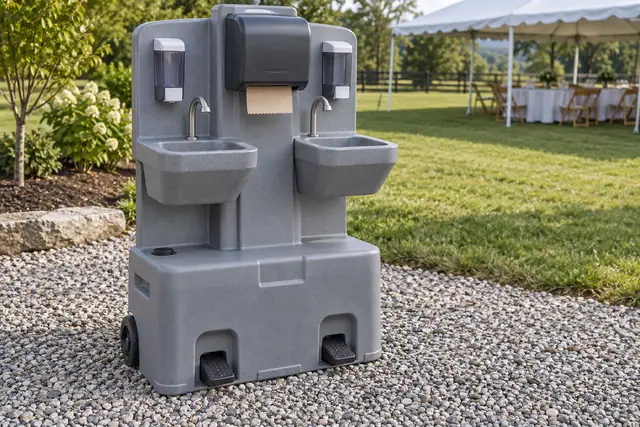
Specify personal washing, not every water-related task
Explain how the station will be used and ask about its actual water, soap, drying and operating features. A personal-washing unit should not be assumed suitable for washing tools, dishes, food-preparation equipment or disposing of project liquids. Tell the supplier if a separate activity needs another kind of wash facility so that it is not quietly added to the wrong station.
Position washing where people will actually use it
Locate the station as part of the restroom journey while preserving enough space for people to approach and leave. At a work site, consider gloves and work equipment without obstructing circulation. At a gathering, avoid hiding washing behind a toilet queue or vendor setup. Include relevant access requirements in the selection and confirm who may use any property utility involved.
Agree replenishment and ordinary event housekeeping
Ask how fresh-water supply, wastewater removal and consumable replenishment are handled for the proposed use. Tell the provider about longer operating days or a substantial increase in users. Arrange ordinary litter collection for used towels with the host, while leaving equipment tanks and servicing to the responsible provider.
A quick visual check by the nominated contact can identify a missing supply or an obstructed station, but it does not replace the accepted service. Keep reporting instructions available and ask the supplier about any interruption rather than improvising refills or connections. A quote should make clear which equipment and service tasks are included.
Questions before you book
Does hand sanitiser mean we do not need a washing station?
Describe the activity and applicable requirements to the responsible organiser and provider. Sanitiser and soap-and-water washing are different functions.